The Grandparent Scam With AI Voice: How It Works and How to Stop It
---
- How the Grandparent Scam Works in the AI Era
- Real Cases: AI Voice Grandparent Scams in the News
- 7 Red Flags of a Grandparent Scam Call
- 6 Steps to Protect Grandparents From AI Voice Scams
- What to Do If a Grandparent Already Sent Money
- FAQ
- Conclusion: A 10-Minute Family Talk Beats Any Scam
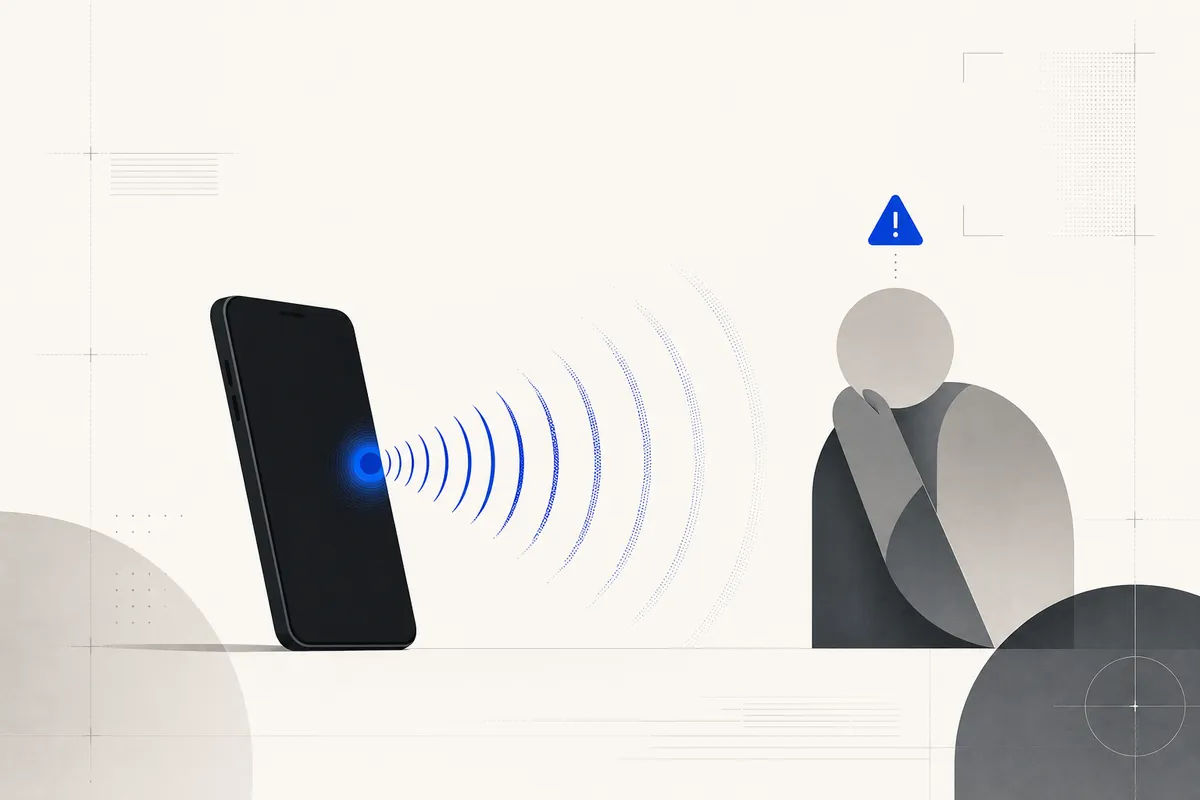
The phone rings late at night. A grandmother hears her grandson, crying, saying he has been in a car accident and is in jail. The voice is his. The panic is real. A lawyer takes the phone and asks for bail money, fast, and says not to tell his parents. In July 2025, a Florida grandmother named Sharon Brightwell lived almost exactly this call and handed $15,000 in cash to a courier, per CBC News. The voice was not her family. It was cloned by AI.
What is the grandparent scam AI voice? The AI grandparent scam uses voice cloning to imitate a grandchild in distress, then pressures the grandparent to send money fast and keep it secret. Defend against it with a family code word, a mandatory callback rule, and by verifying any suspicious recording with an AI voice detector.
If you are reading this, you are probably trying to protect a parent or a grandparent, or you are an older adult who heard about these calls and wants to be ready. You are in the right place. This is not about being gullible. These scams work because the technology got good and because the scammers are experts at fear. Below is exactly how the scam works, real cases, the red flags, and a simple family plan anyone can set up in ten minutes.
How the Grandparent Scam Works in the AI Era
The grandparent scam is not new. What changed is how real it sounds.
The classic script: trouble, urgency, secrecy
For decades, the grandparent scam followed the same three beats. First, trouble: a grandchild is in jail, in the hospital, or stuck in a foreign country. Second, urgency: the money has to move right now, before a court date or a deadline. Third, secrecy: "please don't tell Mom and Dad, I'm so embarrassed."
Those three beats are designed to do one thing. They isolate the grandparent from the people who would calmly say, "Let's call your grandson and check." Fear plus urgency plus secrecy leaves no room for a second opinion. The scammer becomes the only voice in the room.
What AI voice cloning changed
The old version had a weak spot. The caller often did not sound quite right, so a sharp grandparent might say, "You don't sound like yourself." Scammers used to cover this by claiming a broken nose or a bad connection.
AI voice cloning removed that weak spot. Modern tools can copy a person's voice from only a few seconds of audio, close enough in tone, accent, and rhythm that many people cannot tell the difference, per CBC News. Where does the audio come from? Public social media. A birthday video on Facebook, a TikTok clip, a voicemail greeting, or a graduation speech is enough raw material. The grandchild does not have to do anything wrong. A short public video is all a scammer needs.
Real Cases: AI Voice Grandparent Scams in the News
These are not hypotheticals. They are documented, named cases.
Jennifer DeStefano, Arizona (2023). A mother answered a call and heard her 15-year-old daughter sobbing, then a man demanding a ransom. The voice sounded exactly like her child, who was actually safe on a ski trip. DeStefano described the call as terrorizing in written testimony to the U.S. Senate Judiciary Committee on June 13, 2023. She lost no money only because she reached her husband and confirmed her daughter was fine within minutes.
Sharon Brightwell, Florida (2025). Brightwell got a call from her "daughter," crying, saying she had caused a car accident and needed bail. She withdrew and handed over $15,000 in cash to a courier before learning her real daughter was never in trouble, per CBC News. The voice was an AI clone.
The scale of elder fraud. The FBI's Internet Crime Complaint Center (IC3) reported that Americans over 60 lost $4.885 billion to fraud in 2024, a 43 percent jump in losses over the prior year, with an average loss of more than $38,000 per victim, per the FBI IC3 2024 Annual Report. Grandparent scams specifically drew 357 complaints and $2.7 million in reported losses in 2024, per the same report. The true total is almost certainly higher, because many older victims never report the crime out of embarrassment or simply do not know how.
That last point matters. Victims are targeted because the scam is good, not because they are foolish. A cloned voice plus a fear response would shake almost anyone.
7 Red Flags of a Grandparent Scam Call
If a call hits several of these notes, treat it as a scam until proven otherwise.
- A sudden emergency from a grandchild or relative. An accident, an arrest, a hospital, a foreign jail. Crisis is the hook.
- Intense pressure to act right now. Real emergencies allow you to make a phone call. Scams do not.
- A demand for secrecy. "Don't tell Mom and Dad." Secrecy exists only to keep you from checking.
- Payment by gift cards, wire transfer, cash, or a courier pickup. No legitimate bail, hospital, or lawyer asks for iTunes cards or a stranger collecting cash at your door.
- A handoff to a "lawyer," "officer," or "bail bondsman." The new voice adds false authority and keeps the pressure on.
- A voice that cannot answer personal questions. Ask something only the real person would know. A clone often dodges, blames a bad connection, or rushes you past it.
- Resistance to a callback. "Don't hang up, there's no time." A scammer cannot survive you calling your grandchild's real number.
6 Steps to Protect Grandparents From AI Voice Scams
Here is the family plan. Set it up together, out loud, so everyone knows it. Print the large version and put it on the fridge.
1. Set a family code word together
Pick one simple word or short phrase that the whole family knows and that is not posted online anywhere. A pet's old name, a silly inside joke, a favorite vacation spot. If a caller claims to be family in an emergency, ask for the code word. A scammer with a cloned voice will not have it. This is your single strongest defense, and it costs nothing.
2. Make the callback rule automatic
Agree on one rule that never bends: hang up and call the person back on their own number, the one already saved in the phone. Not a number the caller gives you. If you cannot reach them, call another family member. A real emergency survives a five-minute callback. A scam does not.
3. Tighten social media privacy on grandchildren's accounts
Scammers harvest voices from public videos. Help younger family members set their accounts to private and remove public posts that feature long stretches of a grandchild speaking. Less public audio means less raw material for a clone.
4. Pre-agree that no real emergency needs gift cards
Say it plainly as a family: no court, hospital, lawyer, or police department is ever paid in gift cards, wire transfers to strangers, or cash handed to a courier. If a caller asks for any of these, that single fact is enough to know it is a scam. Hang up.
5. Put trusted numbers on speed dial
Program the real numbers of children and grandchildren into the phone, large and easy to find. In a panic, scrolling for a number is hard. A one-touch call to the real grandchild ends most of these scams in seconds.
6. Practice the script once
Run through it together one time. "If someone calls saying Jamie is in jail, what do you do?" The answer: stay calm, ask for the code word, hang up, and call Jamie's real number. Practicing once turns the right response into a reflex when fear hits.
If a voicemail or recording still leaves you unsure, you can check the audio itself. Our AI voice detector lets you upload a clip and returns a verdict of Authentic, Likely Synthetic, or Inconclusive with a TrustScore from 0 to 100. Audio files in MP3, WAV, OGG, or M4A are deleted from primary storage within 60 seconds of analysis unless you opt into retention.
CTA: Got a voice message you are unsure about? Check it free, 50 detections per month. Create a free account
What to Do If a Grandparent Already Sent Money
Act fast, in this order. Money can sometimes be recovered if you move quickly.
- Call the bank or card issuer immediately. Ask them to stop or recall a wire, freeze the account, or flag the gift cards. Wires caught within hours are sometimes reversible. Gift cards are rarely recoverable, which is why speed matters.
- Report to the FTC. File at reportfraud.ftc.gov. The FTC tracks family emergency scams and your report helps investigators.
- Report to the FBI. File with the Internet Crime Complaint Center at ic3.gov. IC3 is the federal hub for fraud against older adults.
- Call local police and ask about Adult Protective Services in your area, which supports older adults targeted by financial abuse.
For a fuller walkthrough, see our deepfake scam response playbook. Reporting is not just paperwork. It is how losses get traced and how the next family gets warned.
FAQ
How do scammers get a grandchild's voice? From public audio. A few seconds pulled from a social media video, a voicemail greeting, or a posted clip is enough for AI tools to build a convincing clone, per CBC News. The grandchild does not have to do anything wrong.
What should a grandparent ask on a suspicious call? Ask for the family code word, then ask a question only the real grandchild could answer, like a detail from your last visit. A scammer will dodge, rush you, or blame the connection. Then hang up and call the real number.
Are grandparent scams reported anywhere? Yes. Report them to the FTC at reportfraud.ftc.gov and to the FBI's IC3 at ic3.gov. IC3 publishes elder fraud loss data every year; in 2024, victims over 60 lost $4.885 billion in total, per the FBI IC3 2024 Annual Report.
Can you check if a voice message is AI? Yes. You can upload a recording to an AI voice detector for a real-or-AI assessment. Our tool returns a verdict of Authentic, Likely Synthetic, or Inconclusive plus a TrustScore from 0 to 100. It works on a saved file or voicemail, not on a live call in progress.
Do banks refund grandparent scam losses? Sometimes, for wires caught quickly. Gift cards and cash handed to a courier are rarely recoverable. That is why the response is the same every time: call the bank the moment you suspect a scam, then report it.
Conclusion: A 10-Minute Family Talk Beats Any Scam
The grandparent scam AI voice is convincing because the voice is real enough and the fear is real. But the defense is simple and it does not require any technology to start. Set a family code word. Make the callback rule automatic. Agree that no emergency is ever paid in gift cards. Tighten privacy, put real numbers on speed dial, and practice the plan once. Ten minutes around the kitchen table beats the most realistic clone a scammer can build. And if a recording still leaves you uneasy, you can always check it.
CTA: Verify a suspicious voice message free, 50 detections per month. Get started free