GAN vs Diffusion Deepfakes: Why the Generator Changes the Detection Game
The deepfake you saw in 2019 and the one you scrolled past last week were built by fundamentally different machines. The first was almost certainly a GAN. The second was probably a diffusion model. Understanding GAN vs diffusion models deepfakes is not academic trivia, because the generator you are fighting decides which artifacts exist to detect in the first place.
- How GANs Generate Deepfakes
- How Diffusion Models Generate Deepfakes
- GAN vs Diffusion Deepfakes: Side-by-Side Comparison
- The Artifacts Each Method Leaves Behind
- Why This Matters for Deepfake Detection
- What Comes After Diffusion?
- FAQ
- Conclusion: Detection Has to Track the Generator
The deepfake you saw in 2019 and the one you scrolled past last week were built by fundamentally different machines. The first was almost certainly a GAN. The second was probably a diffusion model. Understanding GAN vs diffusion models deepfakes is not academic trivia, because the generator you are fighting decides which artifacts exist to detect in the first place.
Direct answer: GAN deepfakes are produced by two competing neural networks and leave sharp, repeatable frequency fingerprints. Diffusion deepfakes are generated by gradually denoising random data and produce subtler, more varied artifacts. That difference is why detectors trained only on GAN-era fakes miss many modern diffusion-based deepfakes.
I work on deepfake detection, so this guide takes the engineering view: how each method actually generates a fake, what tells each one leaves behind, and why the choice of generator quietly reshapes the detection problem. Every technical claim is cited to a primary source.
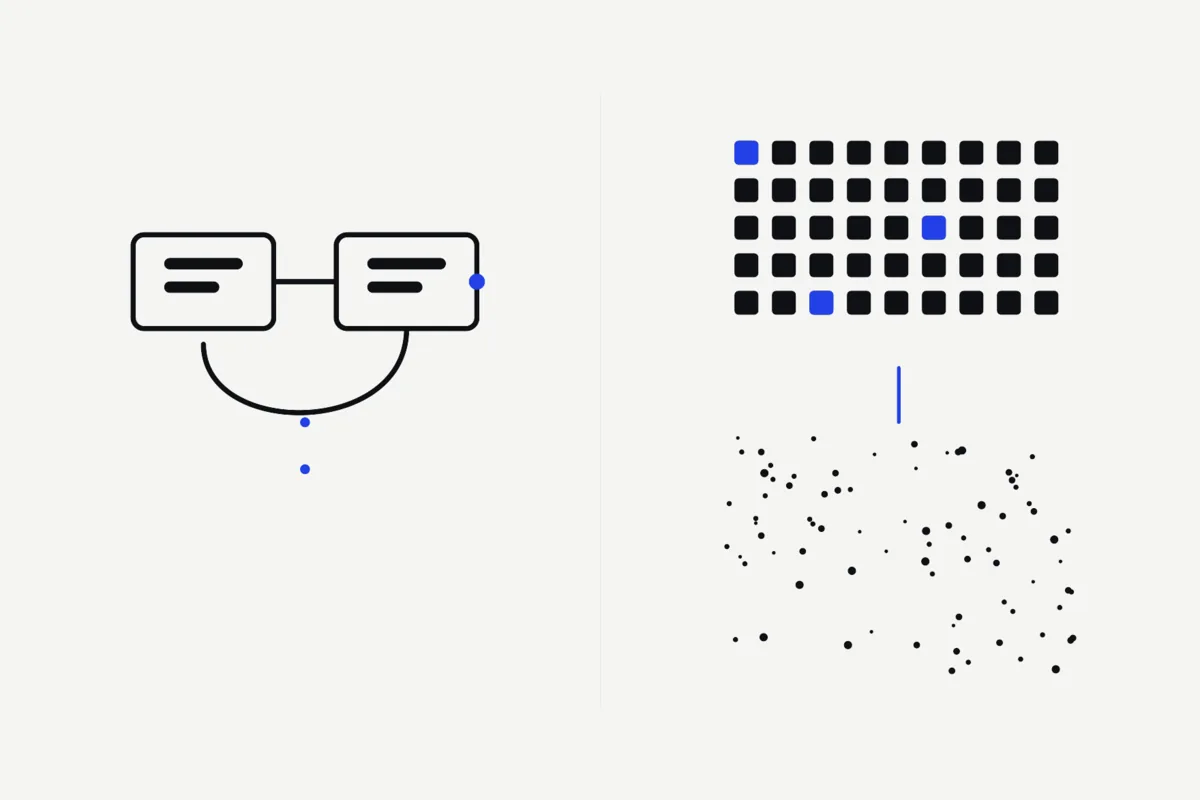
GAN approach
Two networks compete, a generator making faces and a critic judging them, until the fakes pass.
Diffusion approach
The model starts from noise and removes it step by step until a face emerges.
Why it matters
Both invent a person from statistics, which is the root of every detection tell.
How GANs Generate Deepfakes
Generative adversarial networks, or GANs, dominated synthetic media from roughly 2017 to 2022. They introduced the world to convincing AI generated faces, and most early face swap deepfakes ran on them.
Generator vs Discriminator: Adversarial Training in Plain Terms
A GAN is two neural networks locked in a contest. The generator tries to produce fake images. The discriminator tries to tell real images from fake ones. Each one improves by exploiting the other's mistakes, a setup the original paper frames as a minimax two-player game (Goodfellow et al., 2014).
This is adversarial training, the source of the "adversarial" in the name. Over thousands of rounds, the generator learns to fool a discriminator that keeps getting harder to fool. When training works, the generator's output becomes statistically close to real photos. When it fails, you get mode collapse, where the generator produces only a few repetitive outputs.
The whole process maps points from a compact latent space, a low-dimensional grid of random numbers, onto full images in a single forward pass. That single-pass design is why GANs generate fast.
The Classic Face-Swap Pipeline
Early face swaps did not even use a full GAN. They used an autoencoder, a network that compresses a face into a compact code and reconstructs it. Train two decoders, one per identity, share the encoder, and you can reconstruct person A's expressions wearing person B's face.
Later face swap pipelines bolted a discriminator onto that autoencoder to sharpen the output, then blended the generated face into the original footage frame by frame. The blending step, with its color matching and edge smoothing, is exactly where the seams hide.
How Diffusion Models Generate Deepfakes
Around 2022, diffusion models took over. They power the image tools most people now name without thinking, and they are behind the current wave of text-to-video deepfakes.
Denoising From Random Data to Photoreal Output
A diffusion model works backwards from noise. During training it learns to reverse a gradual corruption process: take a clean image, add noise step by step until it is pure static, then teach a network to undo each step (Ho et al., 2020).
To generate, the model starts from random data and denoises it across many sampling steps, often dozens, until a coherent image emerges. This iterative refinement is the headline difference from a GAN's single pass. It is slower, but it gives the model many chances to correct itself, which is a large part of why diffusion output looks so clean.
Because there is no discriminator to collapse, diffusion models also avoid mode collapse and cover a far wider range of subjects and styles.
Text-to-Image and Text-to-Video Deepfakes
Diffusion's other advantage is controllability. By conditioning the denoising process on a text prompt, these models turn a sentence into a matching image, and increasingly into video. That is why a single typed instruction can now produce a fabricated scene with a recognizable person in it.
Our detector aims to detect output from modern diffusion generators across image and video, alongside earlier GAN-based fakes. For the wider picture of how deepfakes are made across formats, see our explainer on what a deepfake is.
GAN vs Diffusion Deepfakes: Side-by-Side Comparison
The two methods differ at almost every layer, and each difference has a downstream effect on detection. The table below is the short version.
| Dimension | GAN deepfakes | Diffusion deepfakes |
|---|---|---|
| Core mechanism | Generator vs discriminator, adversarial game | Iterative denoising of random data |
| Generation speed | Fast, single forward pass | Slower, many sampling steps |
| Training failure mode | Mode collapse, limited variety | Stable, broad coverage |
| Controllability | Limited, mostly latent-space | High, strong text-to-image and text-to-video |
| Typical artifacts | Sharp, repeatable frequency fingerprints | Subtler, more varied statistical traces |
| Dominant era | ~2017 to 2022 | 2022 to present |
| Detection difficulty | Lower, well-characterized tells | Higher, traces are weaker and shift per model |
The Artifacts Each Method Leaves Behind
This is the part that matters for verification. Both methods leave traces, but the traces differ in kind, not just degree. The descriptions below reflect findings from the media forensics field, not the internals of any one detection product.
GAN Fingerprints: Frequency Patterns and Texture Tells
GANs are famous for leaving a frequency fingerprint. The upsampling layers that build an image from a small latent grid introduce regular, periodic patterns that are nearly invisible to the eye but show up clearly when you transform the image into the frequency domain. Researchers have shown these fingerprints are consistent enough to attribute an image to the specific GAN that made it (Yu, Davis, Fritz, 2019).
On the visible side, GAN era fakes often glitched on fine, irregular texture: hair strands, teeth, jewelry, and the background behind a swapped face. Symmetry errors, such as mismatched earrings or eyes, were another classic tell. These artifacts were stable enough that a detector could learn them once and lean on them for years.
Diffusion Artifacts: Subtler Statistics, Different Failure Modes
Diffusion models do not leave the same loud frequency signature. Their iterative denoising smooths away many of the periodic patterns GANs produce, which is precisely why detectors built for GANs lose ground on diffusion images. The forensics traces are present but weaker, and they shift from one diffusion model to the next (Corvi et al., 2022).
Diffusion failure modes are different too. The tells tend to be semantic rather than periodic: hands with the wrong number of fingers, text that dissolves into gibberish, lighting and reflections that do not obey physics, and backgrounds that are coherent locally but nonsensical overall. As models improve, these visible tells are receding, which pushes the burden back onto statistical analysis.
Why This Matters for Deepfake Detection
If you only remember one thing, make it this: a detector is only as current as the generators it has learned to recognize. That is the whole reason GAN vs diffusion models deepfakes is a detection story and not just a generation story.
The Generalization Gap: Detectors Age With Their Training Data
Detectors learn the artifacts that exist in the examples they have seen. A detector that learned GAN frequency fingerprints can be highly accurate on GAN fakes and still stumble on diffusion fakes, because the fingerprint it relies on is faint or absent. The Corvi study documents exactly this drop when GAN-era detectors meet diffusion images, especially after the compression and resizing that social platforms apply (Corvi et al., 2022).
This is the generalization gap, and it has been a recurring finding in the field for years. Detectors that look strong on a benchmark can fade fast against a generator family they were never exposed to (Wang et al., 2020). The lesson is not that detection fails, but that detection has to keep moving.
How Modern Detectors Adapt to Both Generations
The practical answer is coverage across both generations plus ongoing maintenance. We update our models as new generators appear, so detection tracks the generators people actually use rather than the ones that were popular when the model was first built. For a broader survey of approaches, see our guide to deepfake detection techniques.
When you run a file through our AI image detector, the output is a single whole-file verdict, Authentic, Likely Synthetic, or Inconclusive, paired with a TrustScore from 0 to 100, at high accuracy. The score reflects confidence in that verdict. It does not claim to name the exact engine that made the file, because reliable engine attribution in the wild is far harder than a clean benchmark suggests.
What Comes After Diffusion?
Diffusion will not be the last word. Autoregressive video models, which generate footage one chunk at a time, and faster real-time generation are both advancing quickly. Each new family tends to bring its own artifact profile, which restarts the generalization problem.
The honest framing is an arms race. Generators get cleaner, detectors adapt, generators shift again. That is not a reason for fatalism. It is the reason any serious detector treats model freshness as a feature, not a one-time setup. The deepfake detection guide at our deepfake detection pillar covers how to think about that over time.
FAQ
Are deepfakes made with GANs or diffusion models? Both. GANs dominated through about 2022 and still appear in face swap tools, but diffusion models now produce most new high-quality fakes, especially text-to-image and text-to-video.
Which is harder to detect, GAN or diffusion deepfakes? Diffusion deepfakes are generally harder. Their iterative denoising leaves weaker, more variable statistical traces than the sharp frequency fingerprints GANs produce (Corvi et al., 2022).
Do old deepfake detectors work on diffusion fakes? Often poorly. Detectors built on GAN-era artifacts can lose substantial accuracy on diffusion images, the generalization gap, which is why detector freshness matters.
What models make deepfake videos in 2026? The most capable video deepfakes come from text-to-video diffusion model families. Specific product names change quickly, so verify the current leaders before relying on any one example.
Can one detector handle both GAN and diffusion deepfakes? Yes, if it has learned to detect output from both generations and is kept current. Look for a detector that is maintained as new generators appear rather than frozen at launch.
Conclusion: Detection Has to Track the Generator
The core takeaway of GAN vs diffusion models deepfakes is simple. GANs and diffusion models build fakes by opposite routes, an adversarial game versus a denoising chain, and they leave opposite kinds of evidence behind. A detector tuned to one can be blind to the other.
That is why the only durable defense is coverage of both generations plus a habit of verifying anything that matters instead of trusting your eyes. Generators will keep changing. The verification step should not.
Want to see where a file lands? Test one free. Our models aim to cover both GAN and diffusion output, and free accounts include 50 detections per month with no card required.